

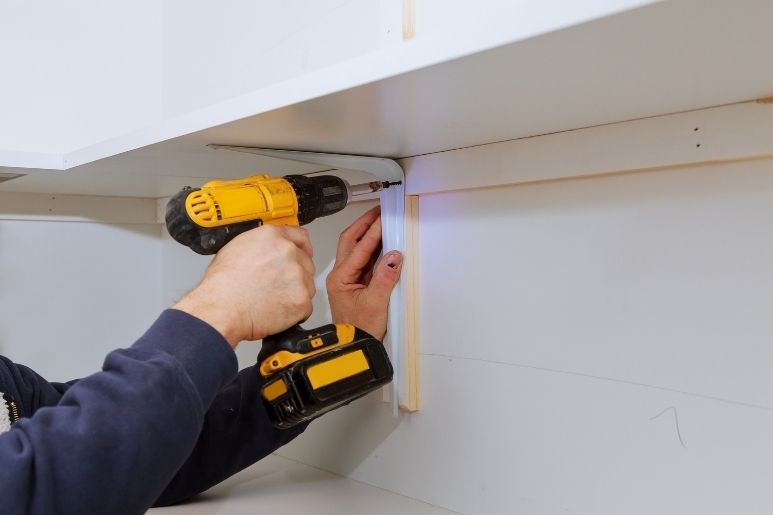
How To Easily Calculate Angles for Shelf Support Brackets
If you have hanging shelves in your space, you should always make sure that they have the proper support. Without it, your shelves could fall, and anything you have stored there could break. For heavier storage shelves or storing heavier objects, you’ll want to feature a shelf bracket for extra support, but these can be tricky to measure. To make things easier, keep reading for all the details on how to easily calculate angles for shelf support brackets.
Why You Need Shelf Support Brackets
Shelf brackets help support more heavy-duty shelving units and the heavier objects stored on top of them. Shelving brackets are necessary for hanging items in heavy-duty shelving projects.
Take Measurements
Start by taking measurements of the height on the wall where you wish to place the support. Remember this as your number for “A.” Next, measure the distance that the shelf extends from the wall to find “B.” Once you have these measurements, note that the angle between the wall and the shelf extension will be 90 degrees for most shelving units.
Quick Calculations
If you think back to your high school math class, you might remember the Pythagorean theorem for calculating the hypotenuse of a right triangle. Installing a shelf is a prime example of this formula’s real-world applications. The Pythagorean theorem reads as A2 + B2 = C2. If you don’t remember how to calculate this equation yourself, you can easily plug in your A and B measurements from the previous step into online generators. This will help you find the angle at which your shelf bracket will be most supportive.
While these high school math applications might bring you back to the past, this is one of the most accurate means for how to calculate angles for shelf support brackets. You can’t say that you never had to use your high school math skills now! For shelving parts and more information on modern shelf brackets, contact Right On Bracket for all your shelving needs.
What To Consider When Installing a Home Bar
The Most Common Fireplace Mantel Mistakes To Avoid
Related Posts

Space-Saving Shelf Ideas for Tiny Kitchens

Quick Guide to Building and Installing a Built-In Workbench

Ways to Use Shelf Brackets as Room Dividers

What To Consider Before Installing Shelves in Outdoor Spaces

Ensuring Your Bracket Installs Meet Building Codes

Tips for Properly Caring for Granite Countertops

Mistakes To Avoid When Installing Corner Shelves
