

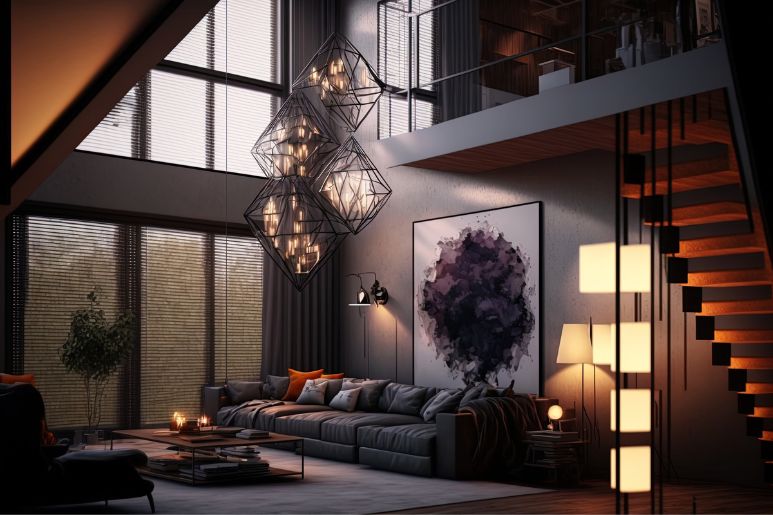
The Ultimate Guide to Mixing Metals Throughout Your Home
There are several interesting ways to add character to your home design. One of the modern and popular ways to do this is by mixing metals within your interior spaces. From different finishes and textures to unique and balanced placements, you can create a stunning space. Here is the ultimate guide to mixing metals throughout your home.
Popular Metal Options
First and foremost, we want to discuss the popular metal options. When you know what options are available, making suitable choices for your home will be easier. Some of the most common metals for interior design are the following:
- Gold
- Silver
- Stainless steel
- Bronze
- Copper
- Brass
- Chrome
- Nickel
- Aluminum
- Wrought iron
Gold, bronze, copper, and brass are warm-toned metals. On the other hand, silver, stainless steel, chrome, nickel, and aluminum are cool-toned metals. You likely already have a few options that you naturally lean toward, so make use of them. You want to pick the metals that speak to you and that you wish to see throughout your home design.
Consider Placement
As you begin designing your space, you will want to consider the placement of your metals. Think about the areas within your home where you want these metals.
For example, maybe you are remodeling your kitchen and want to mix and match different metals throughout the space. Or perhaps you are adding different metal hardware to all your bathrooms. There are many locations within your home where you can utilize and play with various metals.
You can select different metals based on the room you are designing, or you can keep the same staple metals throughout every room in your home. The choices are yours to make, so don’t be afraid to get creative with the process.
Choose a Primary Metal
Once you know what room you will incorporate metal into, you’ll want to start by choosing a primary metal. When mixing metals in an interior space, you don’t want to use so many metals that it creates a lack of balance and cohesion.
Therefore, choosing one metal as your base or primary material is essential. Then, you can use it as your center and work your way out from there. Say, for example, that you love a warmer-toned metal. In this case, selecting gold, bronze, or brass as your primary option is ideal.
Select Complementary Accents
Now that you have your primary metal, you can select complementary accents. The key here is that less is more. If this is your first attempt mixing metals, it may be best to choose fewer accents. Two to three metals are a good starting point. You don’t want to start trying to balance five or more metals, as that can get chaotic and confusing.
It’s also a good idea to keep your metals in the same tone. For example, if your primary is a warm-tone metal, you’ll want other warm-tone metals to act as complementary accents. While that’s not to say that you can’t mix warm and cool-toned metals, mixing tones can be tricky and difficult to pull off well. So if you want to stay on the safe side, it’s recommended to stick to similar tones.
Consider Different Finishes
You should also consider different finishes. There are several metal finishes you can choose from for your design. For example, some popular options include the following:
- Polished
- Satin
- Antiqued
- Brushed
- Hammered
Each of these finishes has a unique look, so you’ll want to select the ones that best complement your space. Please note, however, that not all metals will look good in every type of finish. For example, oil-rubbed finishes are most common for bronze, copper, and brass but less common for other metals. So select finishes based on your primary and accent metals.
The style of your home also plays a major role when choosing the perfect finish. For example, antiqued finishes look best in rustic and farmhouse-style spaces. Brushed finishes work well in modern and industrial spaces, and polished metals look great in mid-century modern interiors.
Consider Different Textures
Along with finishes, you can consider different textures as well. Each type of finish has a unique texture, and playing with these textures is one of the best ways to mix metals within your home. For example, you can keep all the metals in the same type and tone but mix the texture to create diversity.
Hammered and antiqued finishes provide the most texture, giving a little roughness and dimension, which add character and intrigue to a space. Polished, satin, and matte finishes have a smooth, sleek look that fits better within modern, contemporary spaces. Don’t be afraid to play with textures in a way that works for you to create statements throughout your home.
Distribute the Metals Appropriately
Another important tip is to distribute the metals appropriately. Proper distribution is all about where and how you place your metals within a space. Ultimately, you want to space your metals in a balanced way.
We’ll use the kitchen as an example. Say your primary metal is bronze. In this case, you may want to utilize this primary metal for your cabinetry hardware in the room. Then, you can implement complementary accents for your sink faucet and appliances. Bathrooms follow a similar idea, as you can use your primary metal for your plumbing and cabinets, then add your accents for mirror frames, towel bars, and robe hooks. This technique ensures no one metal—even the primary one—overwhelms a space.
Don’t Go Overboard
And finally, the main goal of mixing metals is to create cohesion and harmony. The last thing you want is to create chaos and confusion that ends up looking like a mix-matched mess. If you have any hesitation mixing your metals, the best tip is to limit your amount of accents. Remember that less is more. You can do a lot with various finishes and textures, even if you keep just one primary metal as your focus. Find a balance that makes sense for your space and matches your interior design style, and you’ll be able to master this look.
Now that you know how to mix metals within your interior design, you can utilize and implement these strategies in your home today. And be sure to check out Right On Bracket’s amazing and durable selection of modern shelf brackets as you work on your remodel.

3 Ways To Match Your Backsplash to Your Countertops
Hang Your TV Above the Fireplace? Hide Wires With These Tips
Related Posts

Space-Saving Shelf Ideas for Tiny Kitchens

Quick Guide to Building and Installing a Built-In Workbench

Ways to Use Shelf Brackets as Room Dividers

What To Consider Before Installing Shelves in Outdoor Spaces

Ensuring Your Bracket Installs Meet Building Codes

Tips for Properly Caring for Granite Countertops

Mistakes To Avoid When Installing Corner Shelves
