
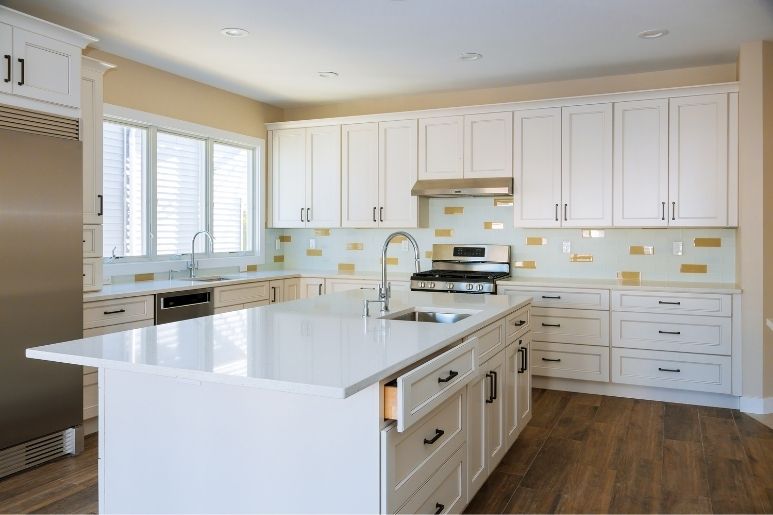
What You Should Know About Countertop Overhang
If you’re getting ready to install new countertops in your home, have you considered countertop overhang yet? A countertop overhang is a countertop section that extends past your cabinets when you install your new countertops. There are many benefits and practical purposes to utilizing countertop overhang during your ordering and installation processes. There are also lots of choices that come with choosing an overhang. If you’re unsure what type of overhang is right for your new installation, keep reading to discover what you should know about countertop overhang beforehand.
Why Leave Countertop Overhang?
There are several reasons to account for countertop overhang during your installation process. If you want to leave space for a seating area at your kitchen or bar countertop, you’ll need to leave an overhang for people to sit at. This also leaves room to store chairs or stools directly underneath the overhang to save space. Countertop overhangs also serve several other purposes. They protect your cabinets from wear and tear, including spills, crumbs, and overhead damage. Furthermore, overhangs serve as stylish choices for any countertop and offer a polished, finished appearance.
Countertop Overhang Styles
Once you’ve decided to implement an overhang for your new countertops, you’ll also need to determine which style you want. Whether your overhang will be only a few inches long or you wish to extend it past 12 inches, you’ll need to choose an edge style regardless. There are various styles and shapes available for countertop overhangs. They may vary based on your manufacturer. The styles can range from practical to decorative. To get a better idea of some of the most common style options available, you can look at this brief list below.
Bullnose
The bullnose style and its variations are some of the most popular choices for countertop edges. Bullnose overhangs have curved edges on one or all sides of the countertop material. The demi-bullnose (half-bullnose) variation features a rounded edge on the top of the overhang. A full bullnose countertop has only rounded edges. These make it incredibly easy to clean and very safe, especially around young children. Additionally, these rounded edges emphasize the thickness and grains inside the material of decorative stone countertops. Watch out for spills, though, as the rounded edges won’t stop them from trailing off your countertop.
Straight Edge
Straight edge is another one of the most common countertop edges. This simple style features sharp, rectangular edges to give your countertops a modern, contemporary look. If you want to emphasize sturdiness and style, then this one is for you because its edge gives your countertops a thick appearance. Another option is the straight edge with a beveled top corner. The top edge of the countertop is filed down to a 45-degree angle to emphasize the style and add some flair to the straight edge. Straight edge overhangs are also quite easy to clean due to their simple lines.
Ogee
Ogee overhangs are for people who wish to jazz up their overhang style choice. The ogee style forms an “S” shape in the edge of the countertop, which juts out past the end of the countertop surface. This ornate style is best for homes with large kitchens, bathrooms, or bars. This is due to the extra length that this style adds. The dip in the “S” shape may be more difficult to clean than other styles, but regular dusting will help you stay on track of dust and debris.
Mitered
You’ll often find mitered edges in commercial bathrooms and countertops because they help blend the seams of the countertop with its base. Mitered edges feature a 45-degree angle that mounts to the patterned stone or other material it rests on. This helps create a seamless look from the base to the countertop. This style is ideal for matching decorative stone countertops with stone bases, as you might do in a bathroom. However, you can utilize the mitered edge anywhere you place cabinets in your home.
Sizing Your Countertop Overhang
Now that you know some styles, we can get into sizing your countertop overhang. First, decide how you’ll utilize your countertop overhang. If you simply want to protect your cabinets from spills and stains or need a place to stand while cooking, a smaller one will suffice. The standard countertop overhang is mere inches long and averages from 1 to 1½ inches long.
However, if you want to extend your overhang to accommodate seating, you’ll need the measurement to account for legroom. Prepare the measurement you’ll need by placing a chair or stool up to your cabinets. Then, measure out a comfortable amount of legroom. Don’t forget to start your measurement where your cabinets end to get an accurate overhang estimate. Typically, a 12-inch overhang is a good estimate for seating purposes.
When your countertops meet a wall or appliance, you usually won’t install any type of overhang at all to keep the countertop flush with the wall or appliance.
How To Support Countertop Overhang
Most often, small countertop overhangs that stretch only a few inches don’t need extra support beyond their cabinet base. However, if you plan to extend your overhang for countertop and bar seating purposes, you’ll need to support the extra weight with a bracket or other form of support. Countertop brackets sit flush with your cabinet and countertop material, reinforcing the underside of the countertop. The longer and thicker the bracket, the more support it will provide for your countertop materials. The specifications for your bracket will change depending on the materials and weight of your overhang. Therefore, you should confirm these details with your countertop provider before installation.
We hope that this guide on what you should know about countertop overhang helped answer some of your questions as you make your decisions. If you plan to turn your new countertop into a place where you can have a bar stool seating arrangement, then don’t forget to stock up on countertop mounting brackets. Right On Bracket offers various brackets to fit your countertop needs and provide a heavy-duty hold for the heaviest countertop materials.

Common Mistakes Homeowners Make With Their Wall Shelves
Popular Shelving Trends for Your Home in 2022
Related Posts

Space-Saving Shelf Ideas for Tiny Kitchens

Quick Guide to Building and Installing a Built-In Workbench

Ways to Use Shelf Brackets as Room Dividers

What To Consider Before Installing Shelves in Outdoor Spaces

Ensuring Your Bracket Installs Meet Building Codes

Tips for Properly Caring for Granite Countertops

Mistakes To Avoid When Installing Corner Shelves
